Why Is My Dog Licking So Much? Skin or Behaviour
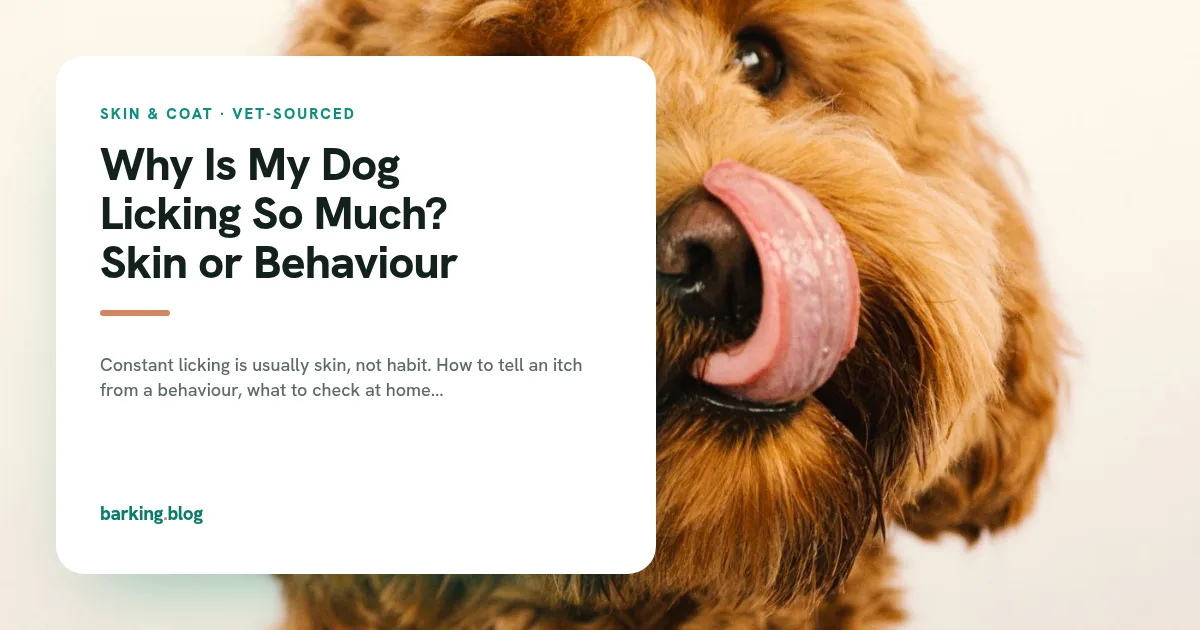
Constant licking is usually skin, not habit. How to tell an itch from a behaviour, what to check at home, and the signs that need a vet.
Quick answer
Occasional licking is normal dog behaviour. Near-constant licking usually is not, and the most common cause is itchy skin from allergies or a yeast build-up rather than habit. The quickest way to tell them apart is where your dog licks: paws, belly and flanks point to skin, while licking you or the furniture points to behaviour.
Most owners search for this after watching their dog lick the same paw for twenty minutes. The honest answer is that licking is normal until it is constant, and once it is constant it is far more often a skin problem than a habit.
Key takeaways
- Where they lick tells you why. Paws and belly point to skin. Licking you or the sofa points to behaviour.
- Paw licking is the classic allergy sign, not a bad habit. Training will not fix an itch.
- Licking carpets and sofas is linked to nausea. It needs a vet conversation, not a training plan.
- Brown staining on the fur is saliva. It means the licking has gone on longer than you realised.
That distinction matters, because the two need opposite responses. An itch needs a diagnosis. A habit needs redirection. Training a dog out of licking an allergy just leaves an uncomfortable dog who has learned to do it when you are not watching.
The fastest way to tell skin from behaviour
Where your dog licks tells you most of what you need to know.
| Where they lick | Most likely | What to do |
|---|---|---|
| Paws, between the toes | Allergy or yeast | Vet, plus paw care at home |
| Belly, flanks, armpits | Allergic skin disease | Vet |
| One fixed spot, skin broken | Hot spot or pain | Vet, same day if raw |
| You: hands, feet, face | Taste, affection, attention | Nothing, unless constant |
| Carpet, sofa, floor | Nausea or compulsion | Vet conversation |
Two more clues. Skin-driven licking tends to be focused, repetitive and hard to interrupt, and it often comes with scratching, rubbing or chewing elsewhere. Behavioural licking usually stops when you redirect your dog’s attention.
When licking means skin
Itchy skin is one of the most common reasons UK vets see dogs, and licking is simply how a dog scratches the parts they cannot reach with a back foot.
The PDSA lists licking and chewing alongside scratching and rubbing as core signs of an itchy dog, which is why constant paw licking is treated as a skin symptom rather than a behavioural quirk.
Verified sourcePDSA, Itchy skin in dogs · read the source →
Allergies are the usual cause. Environmental allergies to pollen, grass and dust mites are far more common than food allergies. Blue Cross notes that skin and food allergies in dogs often show up first as itching around the paws, face, ears and belly, and the Merck Veterinary Manual describes the same pattern.
Yeast follows the licking. Constant moisture between the toes creates exactly the conditions yeast likes. VCA Hospitals describes yeast dermatitis as producing a musty smell, greasy skin and brown staining on the fur. That staining is saliva, and it is one of the clearest signs licking has been going on longer than you realised. Our guide to yeast and Malassezia covers what treatment involves.
Sore paws look like licking too. A grass seed, a splinter, a cracked pad or pododermatitis all produce focused licking on one foot. If only one paw is involved, look at it properly in good light before assuming allergy.
If the skin is already broken, treat it as urgent rather than a home-care job. See licking a wound for why that needs stopping quickly.
When licking means behaviour
Licking you is mostly taste and social habit. Human skin is salty, and feet carry a concentrated mix of scent. Dogs read scent the way we read a noticeboard. Licking people is also learned: it reliably produces attention, and attention rewards it even when the attention is you saying no.
This is normal and does not need fixing unless you dislike it. It is worth a closer look only when it becomes frantic, or when your dog licks instead of doing anything else.
Licking surfaces is different. Persistent licking of carpets, sofas and floors is associated with nausea and gut discomfort, and it is one of the few licking behaviours that warrants a vet conversation before a training plan. If it started suddenly, or comes with drooling, lip-smacking, appetite changes or vomiting, book an appointment.
Boredom and stress produce licking too. Under-stimulated dogs and anxious dogs both self-soothe by licking. The tell is context: it happens when your dog is left alone, or during fireworks, or in the gap between coming home and being fed.
What to actually do at home
Only after skin and gut causes have been ruled out.
Do not reach for bitter anti-lick sprays on skin that is already raw. They sting broken skin and treat the symptom rather than the itch.
When to see a vet
Contact your vet immediately if
- Your dog is retching without producing anything, or their belly is hard or swollen. That is a genuine emergency, so contact your nearest Vets Now out of hours rather than waiting.
- Constant licking or swallowing comes with vomiting, drooling, lip-smacking or collapse.
- You suspect your dog has swallowed something harmful. Call the Animal PoisonLine on 01202 509000.
- A licked area is raw, bleeding or spreading quickly. Licking a wound open invites infection.
Book a routine appointment if the licking is near-constant or focused on one spot, if the skin is red, bald, weepy, smelly or brown-stained, if licking appeared suddenly in an older dog, if there is limping or flinching when you touch the area, or if home care has not helped within a week or two.
The short version
Licking you is usually nothing. Licking themselves, especially their paws, is usually skin. Licking the furniture is worth a vet conversation. And a dog who cannot be interrupted is not being naughty, they are uncomfortable, and comfort is a diagnosis rather than a training problem.
Why does my dog lick their paws so much?
Paw licking is the single most common sign of an allergy in dogs. Pollen, grass and dust mites collect on the paws during walks, and the licking that follows can also let yeast take hold between the toes. Occasional cleaning is normal, but a dog who licks their paws for long stretches, or whose paws are red, brown-stained or smell musty, is telling you something is uncomfortable and needs a vet.
Why does my dog lick my hands and feet?
Mostly because you taste interesting. Skin carries salt, and feet in particular carry a rich mix of scent that tells your dog where you have been. Licking people is also a learned social behaviour: it gets attention, and attention rewards it. It is normal and generally harmless. It only becomes worth investigating if it is constant, frantic, or replaces other normal behaviour.
Is my dog licking the couch a sign of illness?
It can be. Licking carpets, sofas and hard floors persistently is linked to nausea and gut discomfort in dogs, so it is worth a vet conversation rather than a training fix. It can also be boredom or a compulsive habit. If surface licking starts suddenly, or comes with drooling, lip-smacking, a reduced appetite or vomiting, book a vet appointment.
How do I stop my dog licking excessively?
Rule out skin and gut causes with your vet first, because no amount of training fixes an itch. Once your dog is comfortable, redirect rather than scold: interrupt gently, offer a chew or a puzzle feeder, and reward the settled behaviour. More exercise and mental enrichment reduce boredom licking. Never use bitter sprays on skin your dog has already licked raw.
When should I take my dog to the vet about licking?
Go if the licking is near-constant, if it is focused on one spot, or if the skin is red, bald, weepy, smelly or broken. Go promptly if licking appeared suddenly in an older dog, or comes with vomiting, lip-smacking or appetite changes. Licking a wound open risks infection, so a raw or bleeding area needs same-day advice.
The Barking newsletter
Get calmer, vet-sourced advice.
One friendly email when we publish something worth your dog’s while. No spam, no scares.